
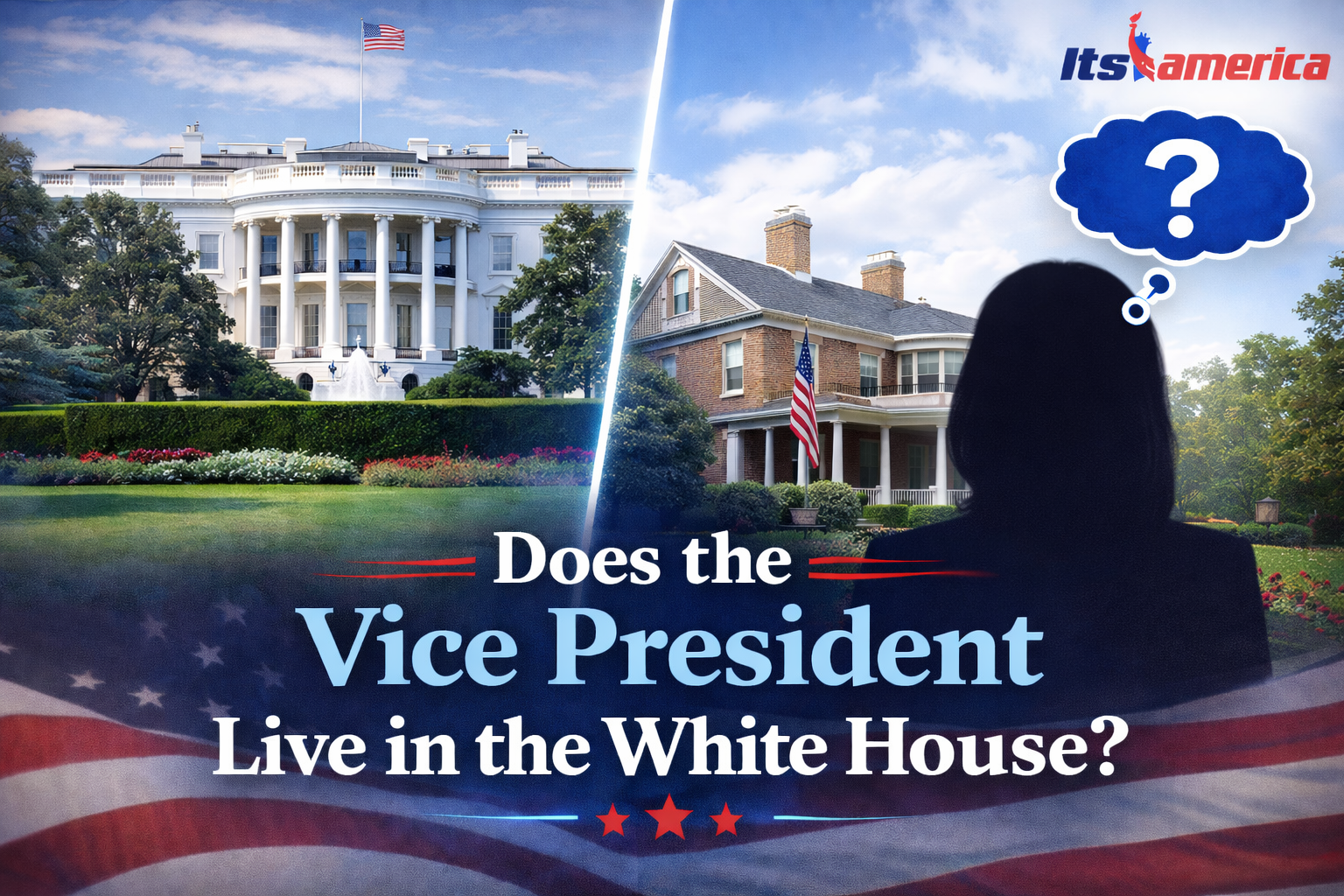
When people ask, does the Vice President live in the White House, the answer is not as straightforward as you might expect, and it is rooted in history, tradition, and government design.
You will discover that although the Vice President works closely with the President and spends significant time at the White House, the official residence is separate and located on the grounds of the United States Naval Observatory in Washington, D.C.
You will learn where this residence is, why it exists, how it is used, and the functions it serves in the life of the Vice President and their family, giving you a clear understanding well beyond casual assumptions.
Why People Think the Vice President Lives in the White House
Most people assume the Vice President lives in the White House because the office is part of the executive branch and is involved in daily operations next to the President. The Vice President does have offices inside the West Wing of the White House complex and participates in regular meetings and briefings, creating the perception of shared residence.
However, your understanding shifts when you learn that since 1977, the Vice President’s official home has been a separate historic residence designed to provide space, privacy, and comfort for the Vice President and their family, distinct from the President’s living quarters.
Modern media and public events from the White House often blur lines between work and home life, reinforcing the idea that the Vice President resides there, but the truth is anchored in legal and historical decisions.
Working close to the President does not necessitate shared housing; instead, it highlights the executive partnership while preserving a distinct residence that accommodates personal life and public function. This separation ensures that the Vice President, while central to daily governance, maintains a home befitting the dignity of the office without overcrowding the President’s private living space.
The Official Residence: Number One Observatory Circle
The official residence of the Vice President is at Number One Observatory Circle, on the grounds of the United States Naval Observatory, approximately two miles north of the White House. This stately home was built in 1893, originally intended for the superintendent of the observatory, and later became home to the Chief of Naval Operations due to its elegance and amenities.
You should recognize that its design reflects a Queen Anne architectural style, with around 33 rooms and significant living and entertaining space that accommodates both private family life and official functions.
Since the mid-1970s, Congress determined that a dedicated residence for the Vice President was necessary to support the increasing demands and security needs of the office, which led to a comprehensive renovation of this home.
Prior to that decision, Vice Presidents often housed themselves in private residences, leading to varied security expenses and logistical challenges for federal authorities. By establishing One Observatory Circle as the official home, the government created a consistent, secure, and suitable space for Vice Presidents and their families.
What the Residence Includes and Why It Matters
Inside One Observatory Circle, you will find a blend of private living quarters and spaces designed for official hospitality, including formal rooms for entertaining foreign dignitaries, staff, and guests.
The home features amenities such as a library, sunroom, outdoor pool, and expansive grounds that offer privacy through wooded landscapes while still within the Washington, D.C. area. This combination allows the Vice President to balance personal life, hospitality roles, and public duties without the constraints that might come from living within the more public White House.
Living in this residence gives the Vice President a level of separation from the day-to-day bustle of the White House while maintaining easy access to the executive workspace, emphasizing both functionality and tradition.
Even though you might assume proximity means shared residence, the design of U.S. government living arrangements supports operational independence and security. The Vice President and family can enjoy a distinct home environment suited to both everyday life and ceremonial duties, enhancing the role’s dignity and comfort.
How the Residence Supports Official Duties
As Vice President, your responsibilities extend beyond private life and require frequent hosting of dignitaries, briefings, and events that support diplomatic and political engagements. The residence at One Observatory Circle allows you to perform these duties with appropriate space and setting, creating a venue for conversations and relationships outside of the White House walls. The design and location of the home enable both formal functions and casual gatherings, reflecting the multifaceted nature of the Vice Presidential role.
For example, you might host a foreign ambassador for a diplomatic dinner in the formal dining room or meet with advisors in a private living space that supports strategic planning away from the public eye.
The separation from the White House living quarters does not distance you from influence; instead, it enhances your capacity to manage personal, ceremonial, and professional aspects of the office. These living arrangements support a balance between life as a senior government official and life as a person with family and domestic needs.
A Historical Look: When This Practice Began
Prior to 1974, Vice Presidents typically lived in private residences, often in Washington, D.C., but the lack of an official residence created inconsistency in security and expenses. Congress responded by approving the refurbishment of 1 Observatory Circle in 1974, setting the stage for the first true official home of the Vice President.
Although Nelson Rockefeller used the house for entertaining, it was Walter Mondale who became the first Vice President to live there full-time with his family, effectively inaugurating a new era in executive housing arrangements.
Over time, every Vice President since Mondale has resided at One Observatory Circle, including George H.W. Bush, Dan Quayle, Al Gore, Dick Cheney, Joe Biden, Mike Pence, and now the current Vice President, emphasizing the tradition’s permanence.
The transition to a dedicated residence highlights not only logistical efficiency, but also respect for the office’s evolving demands and public profile. By living there, Vice Presidents have a stable, secure home that supports both private life and public responsibilities without the confusion that might arise from residing in the President’s home.
Common Misconceptions About Vice Presidential Living Arrangements
Many people confuse proximity with cohabitation, assuming that because the Vice President frequently works at the White House, the residence must be there as well. This misunderstanding is compounded by television coverage, press briefings, and political reporting that show the Vice President in the West Wing, leading casual observers to blend workplace with home life. However, in reality, office space and residential space are separate, with the White House serving primarily as a workplace and the Naval Observatory residence serving as home.
Another misconception is that the Vice President could choose to live elsewhere, but once in office, tradition and security protocols make One Observatory Circle the practical and most secure choice.
While technically a Vice President could maintain a personal home, the federal residency supports necessary security, staff access, and protocol needs that private homes cannot readily provide. Understanding this distinction clarifies not only where the Vice President lives, but why that arrangement exists, reflecting both history and functionality in government design.
By understanding this layout, you also recognize how executive roles are supported by infrastructure that balances tradition, safety, and personal life, removing ambiguity about the office’s residential expectations.
Daily Life of the Vice President at the Residence
Life at One Observatory Circle is more than ceremonial; it involves everyday routines, family activities, and moments of privacy that reflect a balance seldom seen in high political office. You might see staff moving in and out, security personnel stationed strategically, and official vehicles arriving and departing, all creating a rhythm that supports both work and home life. Within the walls, family members experience ordinary life while the Vice President steps into a role that blends public duty with personal responsibilities.
The residence supports this lifestyle by providing rooms and spaces that facilitate relaxation, work, and hosting, making it more than just a symbolic gesture of status. Whether the Vice President is preparing for a legislative session, engaging with community leaders, or enjoying quiet family time, the home environment enables varied aspects of life to coexist. This blend of daily life and official business shows that the Vice President’s residence is both a home and a backdrop for national service.
The Vice President’s Offices Versus Residence
It is important to distinguish between living space and working space, because while the Vice President lives at One Observatory Circle, the primary working office remains inside the White House complex.
The Vice President’s ceremonial office is housed in the Eisenhower Executive Office Building, where meetings, press conferences, and briefings often take place, bridging the work-life continuum with ease. Meanwhile, daily work and collaboration with the President occur in the West Wing, reinforcing proximity without shared residence.
This structure makes practical sense, much like how executives in other fields might live separately from corporate headquarters while still maintaining office presence and responsibilities.
Understanding this arrangement removes ambiguity and reinforces that living in the White House is not a requirement for modern Vice Presidents. Instead, you live in a residence designed specifically for the role, while maintaining working offices where collaboration with the President and other officials happens seamlessly.
Why the Separate Residence Matters Today
In modern governance, the Vice President’s separate residence supports both privacy and operational efficiency, ensuring that personal life and public service are properly balanced. Protocol, security, and tradition converge at One Observatory Circle, giving the office a unique identity distinct from, yet closely tied to, the presidency.
You benefit from this separation because it allows the Vice President to manage life’s diverse demands while remaining fully accessible to the President, staff, and nation.
The value of this arrangement is seen in continuity, comfort, and capability, ensuring that every Vice President since 1977 has a dependable home that supports both personal life and public duty.
Rather than living in the White House, you have a separate but connected residence that reflects the Vice President’s role in government and society, harmonizing work, family, and service. This balance enriches your understanding of the U.S. executive branch and the thoughtful design behind its living arrangements.
Conclusion
Now you have a clear and comprehensive answer to does the Vice President live in the White House. The Vice President does not live in the White House, but resides at One Observatory Circle on the United States Naval Observatory grounds, a historic and functional home designed to balance personal life with public duties.
This living arrangement reflects decades of tradition, security considerations, and practical needs of national governance. By separating residence and workplace, the U.S. government supports the Vice President’s role without confusion or overlap, allowing for privacy, hospitality, and leadership. Understanding this distinction deepens your awareness of how the executive branch operates, honoring both tradition and the evolving demands of public office.
