
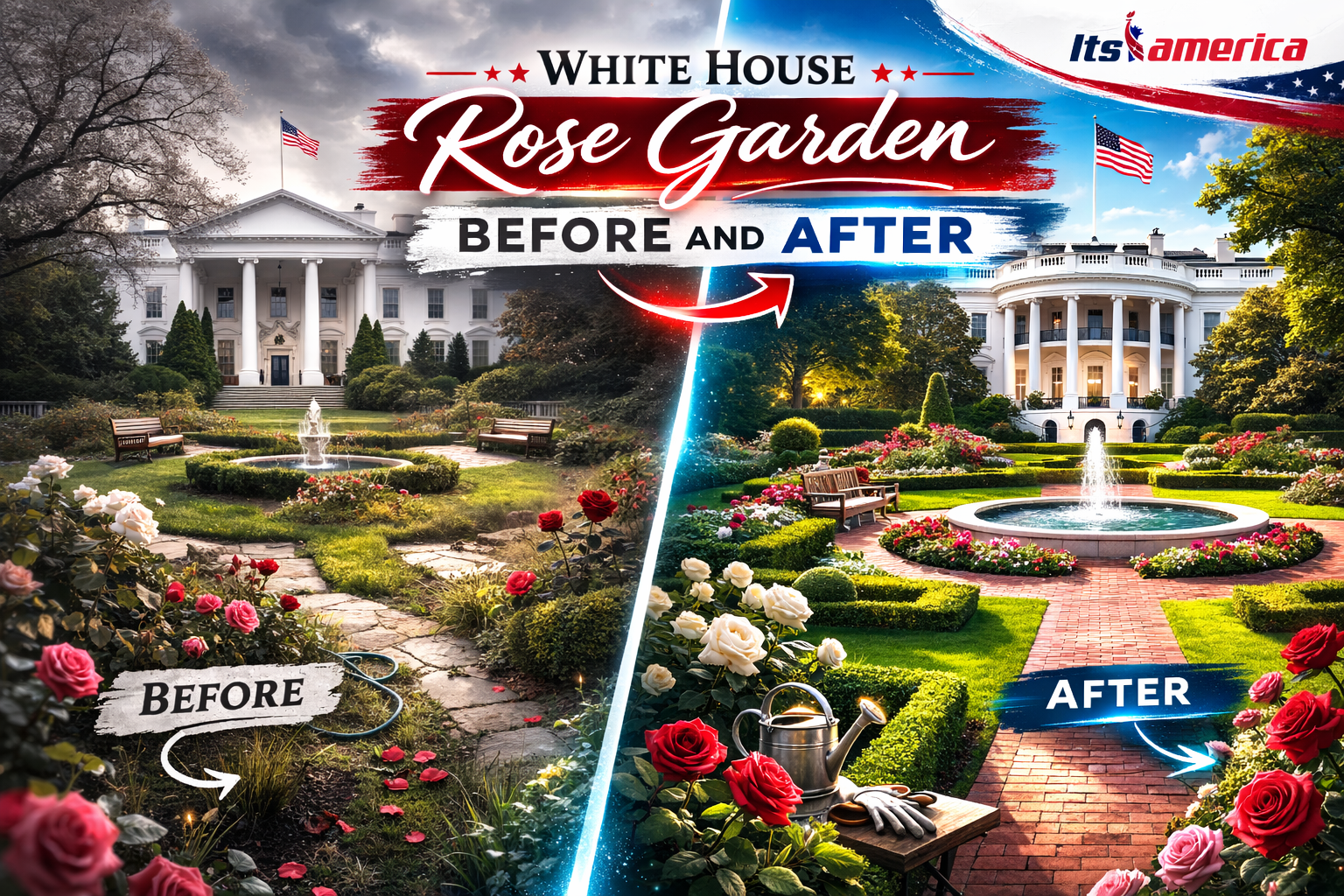
You have likely seen striking images of the White House Rose Garden before and after its major redesigns and wondered what all the changes mean for history and symbolism. When you compare the Rose Garden’s classic lawn under Kennedy with its latest hardscape transformation, you are seeing more than landscaping choices—you are seeing how presidential priorities shift across eras.
This article gives you clear context, historical evolution, practical reasons for design changes, public reaction, and what the future might hold for one of the most photographed outdoor spaces in the United States, so you can fully grasp the full story behind these transformations.
The Origins of the White House Rose Garden
The earliest phase of the Rose Garden was far from the manicured setting we know today, and if you delve into historical narratives that highlight American heritage, such as the story of the founding of historic St. Augustine at Pedro Menendez de Aviles: The Legacy of the Founder of St. Augustine you see how deep American history runs in diverse locations.
This early chapter shows you that spaces we now view as ceremonial often started with purely practical intentions, much like early colonial settlements that were created for utility rather than prestige. The Rose Garden began with greenhouse plots and service areas before being envisioned as a formal space for beauty and gatherings.
First Lady Ellen Wilson in 1913 first introduced formal plantings, and subsequent First Ladies and Presidents continued to shape the space with a focus on symmetry and seasonal flowers. From these modest beginnings, the Rose Garden gradually grew into a space that blended horticulture with symbolism and ceremony. These foundational steps set the stage for the transformative redesign that would occur decades later.
The Kennedy Era Redesign That Set the Standard
When you look at white house rose garden before and after images from the early 1960s, the Kennedy-era change stands out as the most impactful. This version of the garden was crafted to be visually elegant and functionally ceremonial, creating a lush lawn framed by flower beds and shrubs that complemented the nearby West Wing. Press conferences, diplomatic meetings, and bill signings were staged here, reinforcing the garden’s identity as more than just landscaped space.
This layout became iconic, shaping popular visuals of presidential leadership for generations, and it endured with only minor tweaks by subsequent First Families. The lawn in particular became a defining characteristic, symbolizing both tradition and stability. While changes after this period were incremental rather than structural, the Kennedy redesign laid the template that most Americans still associate with the Rose Garden’s classic look.
Subtle Shifts and Minor Updates Over the Decades
Following the Kennedy redesign, the white house rose garden before and after narrative enters a long period of subtle refinement rather than dramatic overhaul. The U.S. Presidents Reagan, Clinton, and others made small updates to plant varieties, lighting, pathways, and maintenance practices to preserve the garden’s usability. These changes addressed practical needs without altering the garden’s iconic character.
This era of adjustments reveals how design and function often balance in historic spaces, a concept also explored thoughtfully in articles like San Pedro Square San Jose: A Hub of Heritage, Culture, and Community Evolution which examines how historic urban spaces evolve over time while honoring their roots. Similarly, the Rose Garden adapted to its role as both a ceremonial and working space without losing its fundamental identity.
Over time, technological changes in lawn care and media production gradually influenced how the garden was used. But to those taking photos and attending events in this period, the Rose Garden looked and felt consistent, bolstering its image as a timeless stage for American leadership.
The 2020 Renovation: Function, Form, and Preservation
The first significant modern redesign came in 2020, focusing on practical improvements while striving to maintain the garden’s historic look. This renovation included improvements in drainage, accessibility, and sunlight exposure for plantings. Pathways were reconfigured, and certain plantings were adjusted to ensure health and longevity.
Supporters of this update viewed it as responsible stewardship rather than a stylistic overhaul, aiming to preserve the garden’s classic lawn and beds for future use. At this stage, white house rose garden before and after images still emphasized continuity rather than disruption, maintaining visual familiarity for visitors and viewers alike. The essence of the garden remained intact even as its infrastructure improved, blending past and present in a quiet evolution.
The 2025 Transformation: A Radical Redesign
By 2025, the white house rose garden before and after story took its most dramatic turn yet. At the heart of this latest renovation was the decision to remove the iconic grass lawn entirely and replace it with a paved stone surface. This change transformed the central area from a soft lawn into a courtyard-like space, visibly altering the garden’s aesthetic and function.
Officials explained that this redesign was intended to make the space more durable, accessible, and suitable for frequent events, particularly with heavy press equipment and large gatherings. The new design makes it easier to host modern presidential events without the constant upkeep that a grass lawn demands. Photos from this period show a stark before and after contrast, highlighting the significant shift in visual language.
While supporters praise the practical benefits, many observers see this as a departure from tradition. The lawn had been such a recognizable feature that its removal feels to some like an erasure of a symbolic, historical element rather than just a landscaping update. This tension between practicality and heritage continues to drive debate around the redesign.
Public Reaction and Cultural Conversations
When you take in white house rose garden before and after photos, you also see a wide range of public opinion. Social media and commentary have reflected divided views, with some welcoming the modern look and functionality, and others lamenting the loss of the classic lawn. Images of the garden with a paved center now circulate alongside older photos, fueling emotional responses rooted in nostalgia.
For critics, the lawn was more than green grass—it was a symbol of stability and tradition, a visual anchor that connected generations of Americans to a shared national image. Supporters counter that evolving the space for modern needs makes it more useful and sustainable. These mixed responses show how public spaces do more than serve their direct function—they also carry meaning for those who view them as part of the nation’s identity.
Symbolism and What It Means for Presidential Legacy
Each version of the white house rose garden before and after tells you something about the priorities of the time. The Kennedy-era lawn signified elegance and optimistic leadership. The 2020 renovation balanced preservation with improved access and health for plantings. The 2025 redesign underscores a shift toward utility and adaptability in public spaces.
These choices are not made lightly; they reflect evolving ideas about what presidential spaces should represent. Whether future administrations decide to preserve the paved surface, restore a lawn, or seek another hybrid approach, the garden’s evolving story continues to serve as a visual record of shifting leadership philosophies.
Looking Ahead: Possibilities for the Next Chapter
The Rose Garden’s next chapter is unwritten, but the white house rose garden before and after journey gives you clues about how change and continuity interact in historical settings. Future design choices will likely grapple with balancing historical reverence with practical needs for a modern presidency. Advances in technology and sustainability could influence how greenery and hardscape coexist.
Learning from the past, future updates may find creative ways to reintroduce softer elements or hybrid designs that draw from multiple eras. Regardless of the specific choices made, one thing remains clear: change is part of the garden’s identity, and each iteration adds a new layer of meaning to its rich visual history.
Conclusion
When you compare the white house rose garden before and after its many transformations, you are doing more than studying landscaping decisions—you are witnessing how symbolism, tradition, practicality, and public perception intersect in a space that has been part of American life for more than a century.
Each redesign tells a story about priorities, technology, and cultural values of the time. From early formal plantings to iconic lawns and now modern stone surfaces, the Rose Garden continues to evolve while remaining one of the nation’s most photographed and meaningful outdoor spaces. Through these changes, you can appreciate not just aesthetic differences but the complex dialogue between history and progress that shapes every iteration.
