
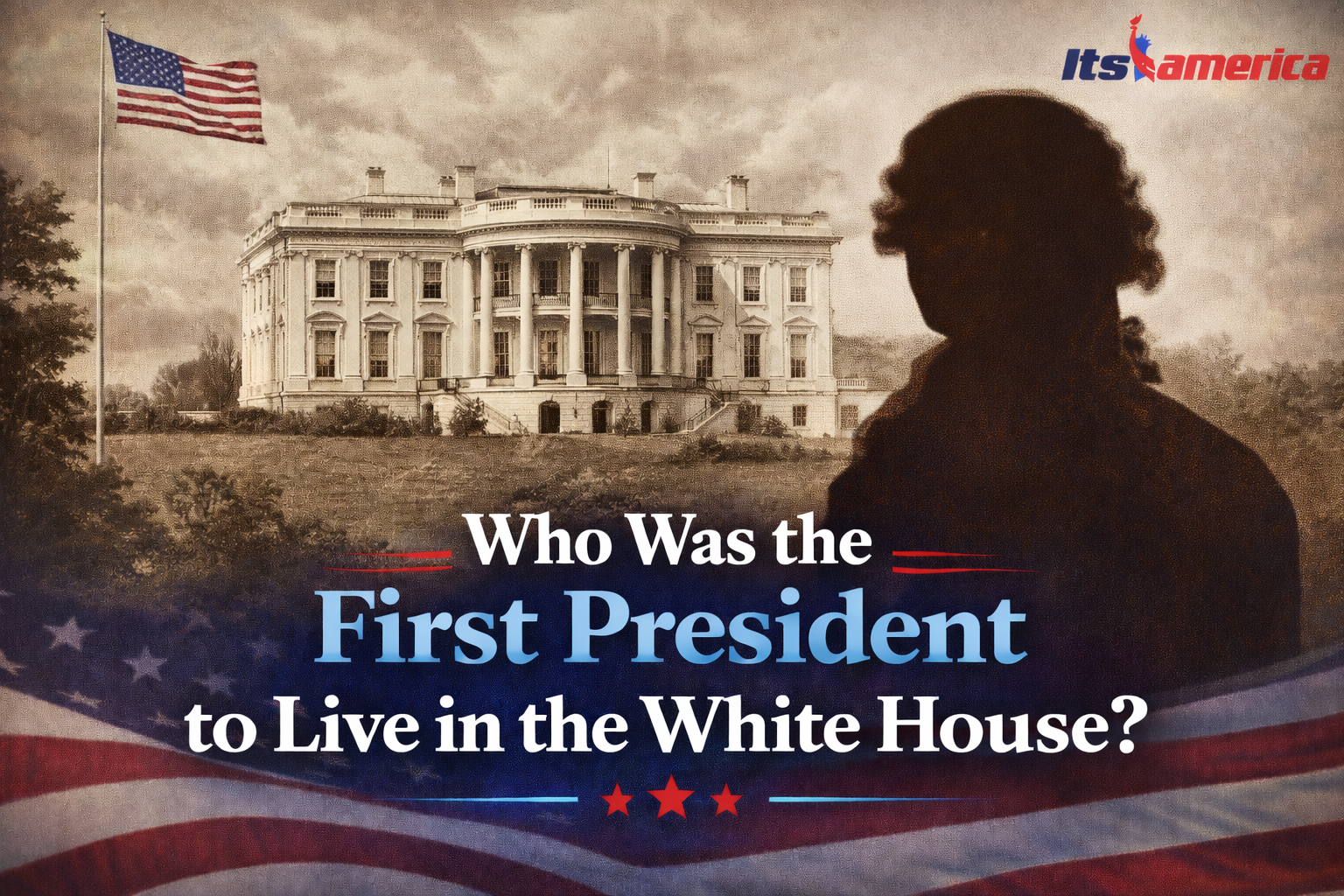
When you ask who was the first president to live in the White House, you are uncovering a defining moment in American political history. This milestone represents the transition of the presidency from temporary residences into a permanent symbol of national leadership.
By understanding this moment, you gain insight into how the White House became more than a building and instead evolved into the enduring center of executive power and public trust in the United States.
The Direct Answer to Who Was the First President to Live in the White House
The first president to live in the White House was John Adams, and this distinction carries lasting historical importance. Many people assume George Washington held this honor, but the White House was still under construction when his presidency ended. Adams moved into the residence in November 1800, becoming the first sitting president to call it home.
This event marked the first time the presidency operated from a permanent executive residence. Although the building was incomplete, Adams chose to move in to establish continuity for future administrations. His decision tied the presidency to a fixed location in the nation’s capital.
Understanding this answer also helps place the moment within the broader scope of American history and political development.
Why George Washington Never Lived in the White House
You may wonder why George Washington never lived in the White House despite being the nation’s first president. The reason lies entirely in timing, as construction was not completed until the final months of his successor’s term. Washington approved the site and oversaw early planning, but he never saw the finished residence.
During his presidency, Washington lived in official homes in New York City and Philadelphia, which served as temporary capitals. These arrangements reflected the early uncertainty about where the federal government would permanently reside. The White House was designed to solve that problem, but it came too late for Washington himself.
This distinction makes John Adams’ move even more meaningful because it represents the shift from temporary solutions to lasting institutions.
What the White House Was Like When John Adams Moved In
When John Adams moved into the White House, the building was far from the polished landmark you recognize today. You would have encountered unfinished rooms, damp walls, and limited heating throughout much of the structure. The residence lacked many comforts that later presidents would take for granted.
Abigail Adams famously used one of the large rooms to hang laundry, showing how basic daily life could be inside the early White House. These conditions highlight the personal sacrifices involved in early presidential service. Despite this, the Adams family treated the move as a responsibility rather than an inconvenience.
By occupying the White House under such conditions, Adams reinforced the idea that the presidency was rooted in duty and permanence.
How Living in the White House Shaped Presidential Tradition
John Adams’ decision to live in the White House helped define how future presidents would approach the office. You can see how his residency established the building as both a private home and a public workplace. This balance became a defining feature of the presidency.
The White House soon became a place where governance, diplomacy, and family life intersected. Adams demonstrated that the president must remain closely connected to the seat of government. Over time, this expectation shaped how presidents interacted with staff, lawmakers, and the public.
This tradition strengthened the institutional identity of the presidency and reinforced continuity across administrations.
The Symbolic Importance of the First White House Resident
Living in the White House carried powerful symbolism for the young nation. You can view Adams’ move as a declaration that American leadership had a permanent foundation. The building itself became a physical representation of executive authority.
Unlike royal palaces, the White House symbolized democratic service rather than inherited power. Adams understood that occupying the residence was about representing the people, not elevating himself. His approach reinforced republican values at a crucial moment in national development.
That symbolism remains intact today, connecting modern presidents to the ideals established at the nation’s founding.
Daily Life Inside the Early White House
Daily life inside the White House during Adams’ presidency was modest and demanding. You would not find the elaborate staff or advanced infrastructure associated with later administrations. Instead, the household relied on limited resources and personal discipline.
Cold rooms, unfinished hallways, and simple meals were part of everyday life. These conditions shaped how Adams and his family experienced leadership from within the residence. The reality of early White House life reveals how closely personal sacrifice and public service were intertwined.
Understanding this daily routine helps humanize the early presidency and makes the institution feel more relatable.
How the White House Became Central to Presidential Identity
After John Adams, the White House quickly became inseparable from the presidency itself. Thomas Jefferson and later presidents expanded its role as a place of public engagement and national symbolism. Each administration contributed to its evolving character.
The building became a space for official receptions, policy discussions, and public ceremonies. This evolution reinforced the idea that leadership should be visible and accessible. Over time, the White House grew into a focal point of national attention.
You can see how this transformation mirrors broader American cultural narratives, similar to how national identity is reflected in popular discussions such as American media history.
Common Misconceptions About the First White House Resident
One of the most common misconceptions is that George Washington was the first president to live in the White House. This assumption is understandable but historically inaccurate. Clarifying this point helps preserve the accuracy of early American history.
Another misconception is that the White House was fully completed when Adams arrived. In reality, it was still under construction, making his decision to move in even more significant. These details add depth to the story of early presidential leadership.
By correcting these misunderstandings, you gain a clearer and more accurate picture of how the presidency evolved.
The Rebuilding of the White House and Its Lasting Meaning
The White House did not remain unchanged after its first occupancy, and its survival became part of its story. When the building was burned during the War of 1812, it faced the possibility of being abandoned entirely. Instead, the decision to rebuild reinforced its importance as a permanent seat of leadership.
Reconstruction preserved the original structure while strengthening its design and symbolism. This choice reflected national resilience and confidence in the presidency as an enduring institution. The rebuilt White House carried forward the legacy that began with its first resident.
This moment shows that the meaning of the White House extends beyond any single administration. Its continued use affirmed that leadership, once rooted, could withstand even national crisis.
Why This History Still Matters Today
Knowing who was the first president to live in the White House gives you deeper insight into how American leadership was shaped. This moment established the residence as a living institution rather than a ceremonial structure. It demonstrated that leadership requires commitment even under imperfect conditions.
The continuity that began with Adams still defines how Americans view the presidency. The White House remains a symbol of responsibility, stability, and national unity. That meaning started with its first resident.
This connection between leadership and national identity can also be seen in moments when Americans rally around shared experiences, such as major international events like soccer between the USA and Netherlands.
Conclusion
The question of who was the first president to live in the White House reveals a foundational chapter in American history. John Adams’ move into the unfinished residence in 1800 transformed the presidency from a temporary office into a permanent institution.
By choosing duty over comfort, he set a precedent that shaped every administration that followed. This decision helped define the White House as a symbol of service, continuity, and democratic leadership. When you understand this history, you gain a clearer appreciation for how the presidency became anchored to a place that still represents the nation today.
